
The Ultimate Guide: Exploring Muong Hoa Valley Sapa
Sapa is a town in the Lao Cai Province in northwestern Vietnam, nestled in the Hoang Lien Son mountains. While it is famous for its stunning natural scenery, the Muong Hoa Valley Sapa stands out as the region’s largest and most iconic rice terrace area. Therefore, embarking on this 3.5-hour journey is the most effective way to witness the intersection of ancient history and vibrant tribal cultures.
Why Visit the Muong Hoa Valley Sapa?
Furthermore, this destination offers a “shoestring” adventure that brings you beyond beautiful terrain with outstanding views. The valley is home to a variety of ethnic minority groups. To provide concrete statistical context, the Sapa region is inhabited by the Hmong (approx. 52%), the Dao (approx. 25%), and the Tay (approx. 5%). Consequently, a trek through Muong Hoa Valley Sapa allows you to see the Red Dao and Black Hmong tribes living amidst ancient volcanic boulders. For official demographic records, you can visit the General Statistics Office of Vietnam (Link out to external resource).
| Feature | Details |
| Duration | 3.5 Hours (Half Day) |
| Key Landmark | Sapa Ancient Rock Field (159 carved rocks) |
| Ethnic Groups | Red Dao and Black Hmong |
| Highlights | Rattan Bridge, Muong Hoa Waterfall |
The Mystery of the Ancient Rock Field
One of the most fascinating aspects of Muong Hoa Valley Sapa is the field strewn with ancient volcanic boulders. Uncovered by a French researcher in 1925, there are 159 carved rocks spread across an area of eight square kilometers. These petroglyphs and carvings have puzzled researchers and archaeologists for over a century due to their unknown origins.
Trekking to Giang Ta Chai and Su Pan
After exploring the mystery of the rocks, you will follow a dirt trail downhill. This section of the trek involves:
-
The Rattan Bridge: A traditional suspension bridge named after the natural material used in its construction.
-
Giang Ta Chai Village: The ancestral home of the Red Dao people, known for their striking red headdresses.
-
Su Pan Village: A smaller community offering an intimate look at the daily life of the Black Hmong.
Itinerary and Timestamps
Operates: 08:30 – 11:30 or 13:00 – 16:30
Step 1: The Descent to Muong Hoa


Your journey begins with a short drive south of Sapa towards the heart of the valley. You will first arrive at the Ancient Rock Field to witness the petroglyphs up close.
Step 2: Bridge Crossing and Waterfalls

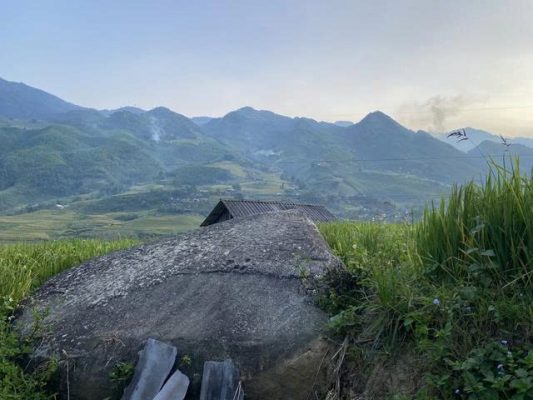

Following the trail, you will cross the Rattan Bridge and pass the cascading Muong Hoa waterfall. This path provides the best vantage points for photographing the vast terraced fields.
Step 3: Tribal Interaction

Enter the villages of Giang Ta Chai and Su Pan. Here, you will grasp an insight into the traditional customs passed down through generations before being transferred back to Sapa.
Essential Trip Information
Before booking your Muong Hoa Valley Sapa adventure, please review the package details. For full-day trekking options, check our Internal Marketing Services (Internal Link).
Inclusions:
-
Transportation and English-speaking guide.
-
Mineral water and all mentioned entrance fees.
-
All tours and activities as described in the itinerary.
Exclusions:
-
Meals and drinks at meals.
-
Personal tips and gratuities.
Ultimately, this 3.5-hour journey provides the perfect balance of archaeological mystery and breathtaking mountain scenery.
Check out this Ma Tra village tour!