
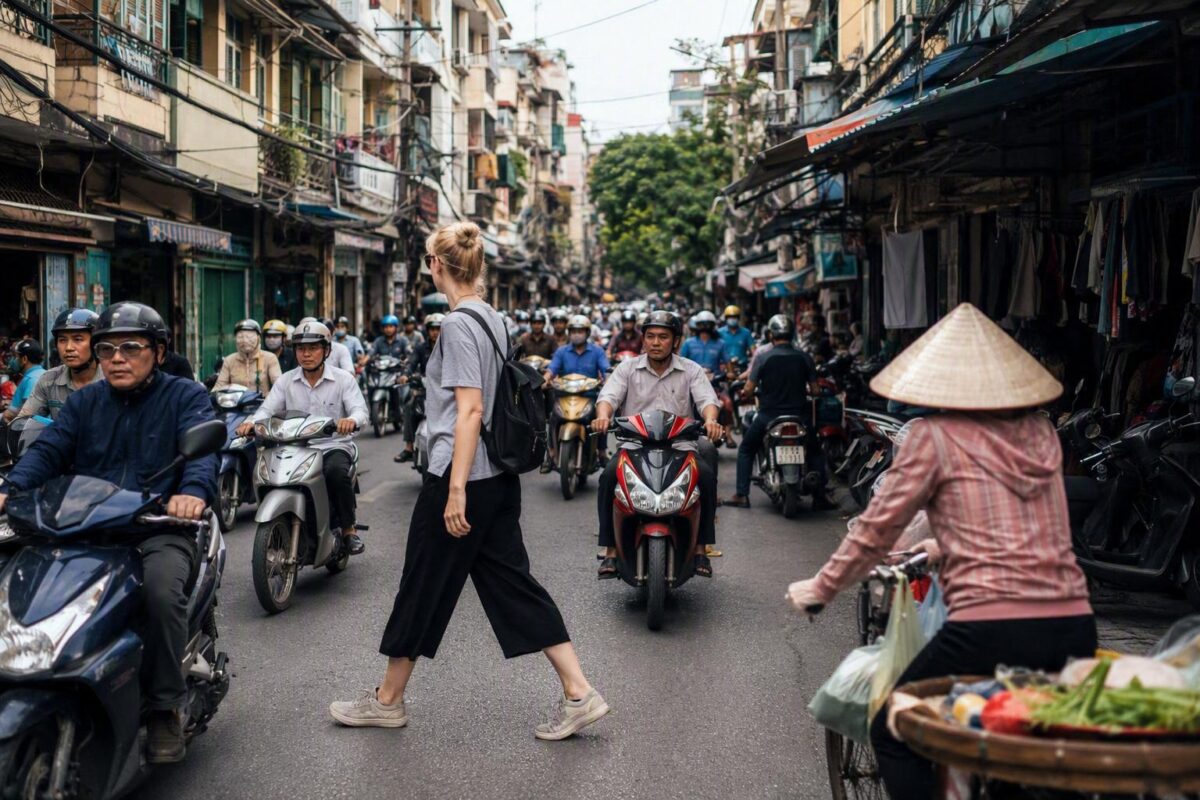
Hanoi street crossing can feel like a real-life video game on day one. The Old Quarter fills with motorbikes from every direction, and first-time visitors often freeze at the curb waiting for a gap that never quite arrives.
This Hanoi street crossing guide turns that chaos into a simple system: how traffic actually works, what to do with your feet, and how to stay calm when the stream keeps moving. No special skill required — only steady habits.
Why Hanoi street crossing feels intense at first
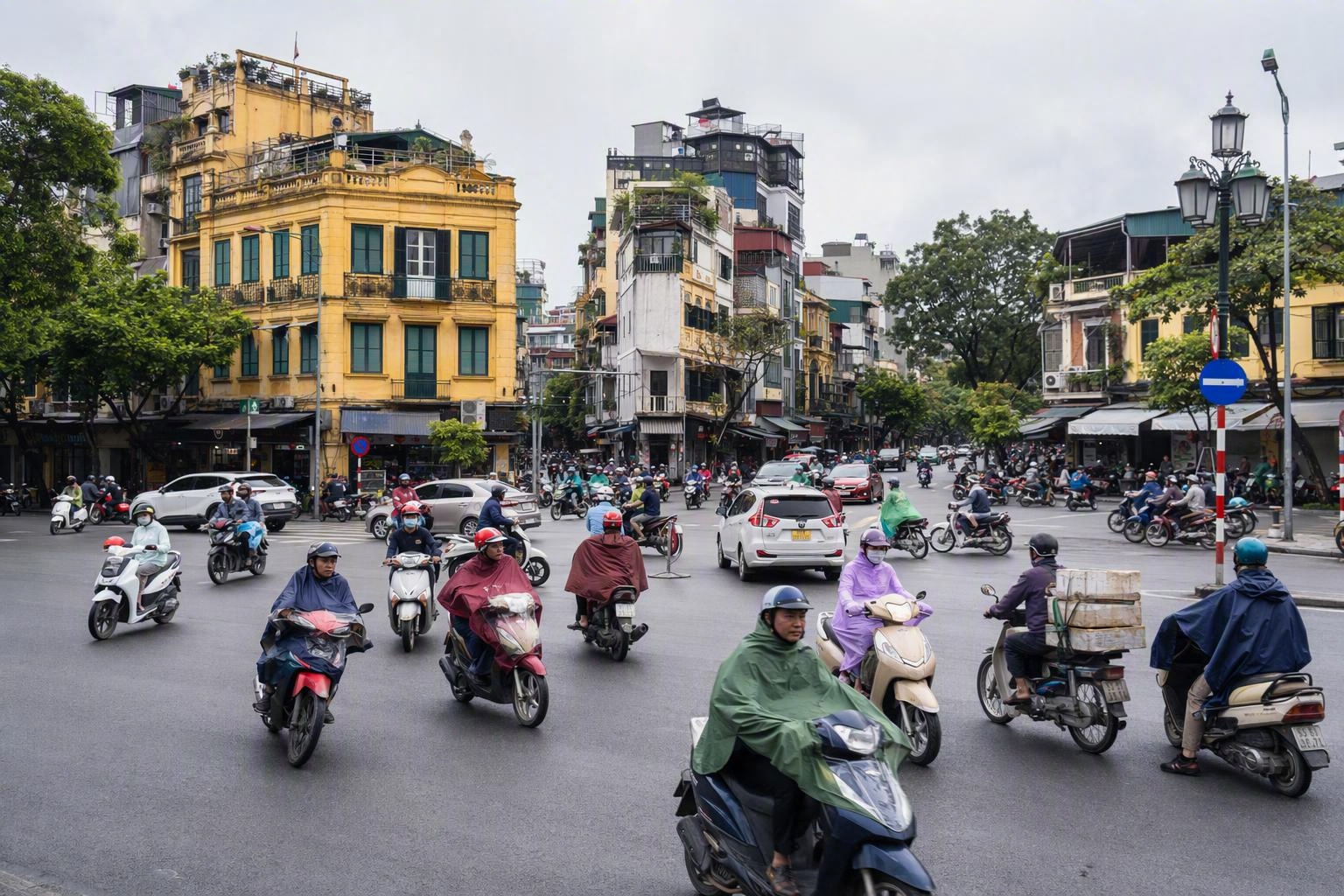
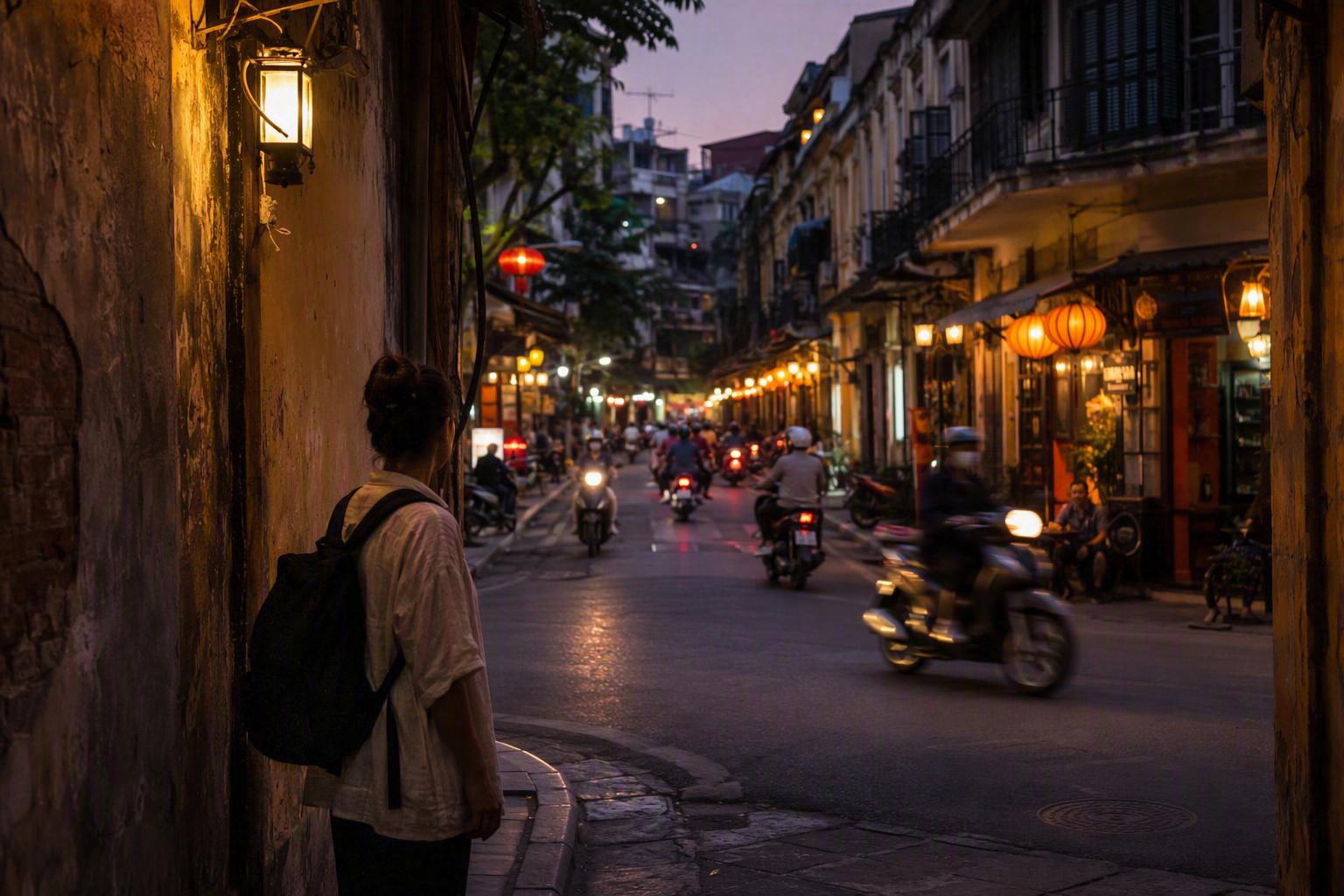
Most travellers arrive from cities where cars dominate and pedestrians wait for clear openings. Hanoi, especially around Hoan Kiem and the Old Quarter, runs on a different rhythm. Motorbikes flow in continuous streams, often turning across lanes, and the pavement itself can be shared with parked bikes and vendors.
The fear usually comes from expecting a quiet road. However, once you understand that riders are already predicting your path, the task changes. You are not trying to dodge every bike; you are making yourself easy to read. That mental shift is the core of confident street crossing in the capital.
Six practical rules for Hanoi street crossing
Instead of memorising a long list, treat these as a short checklist. Local visitor notes and first-hand travel write-ups tend to repeat the same practical points.
Walk slowly and steadily
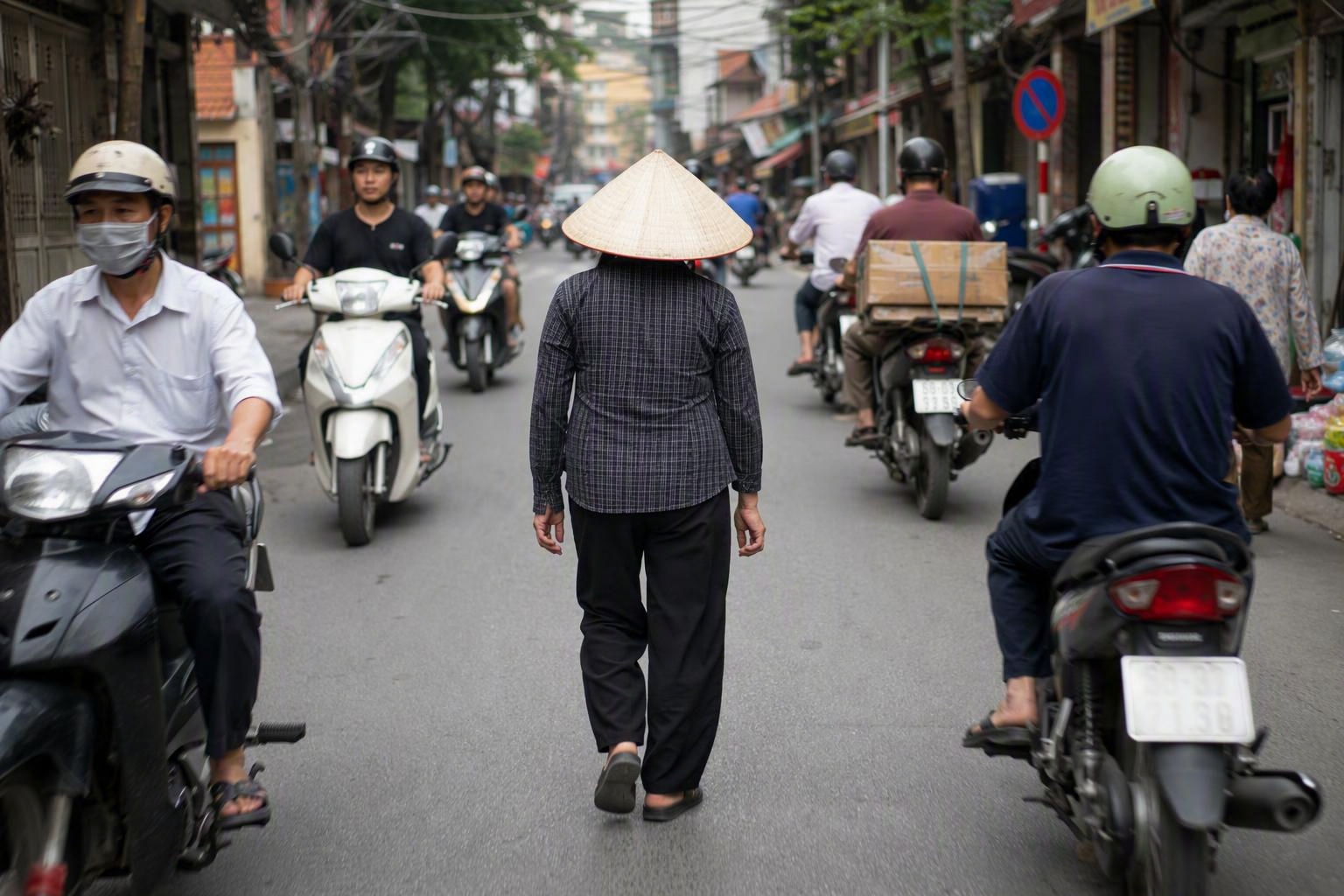
Keep moving at a constant pace. Walk in a straight line. Do not run, stop suddenly, or step backward. Motorbike riders adjust around a predictable pedestrian far more easily than around someone who darts. A calm, even step is the single most useful habit for Hanoi street crossing.
Do not wait for a perfect gap
In dense parts of the Old Quarter, a fully empty lane may never open. Choose a safer moment, step forward with purpose, and hold your pace. Traffic will usually flow around you. Waiting forever often makes the crossing harder, not safer.
Cross with a local when you can
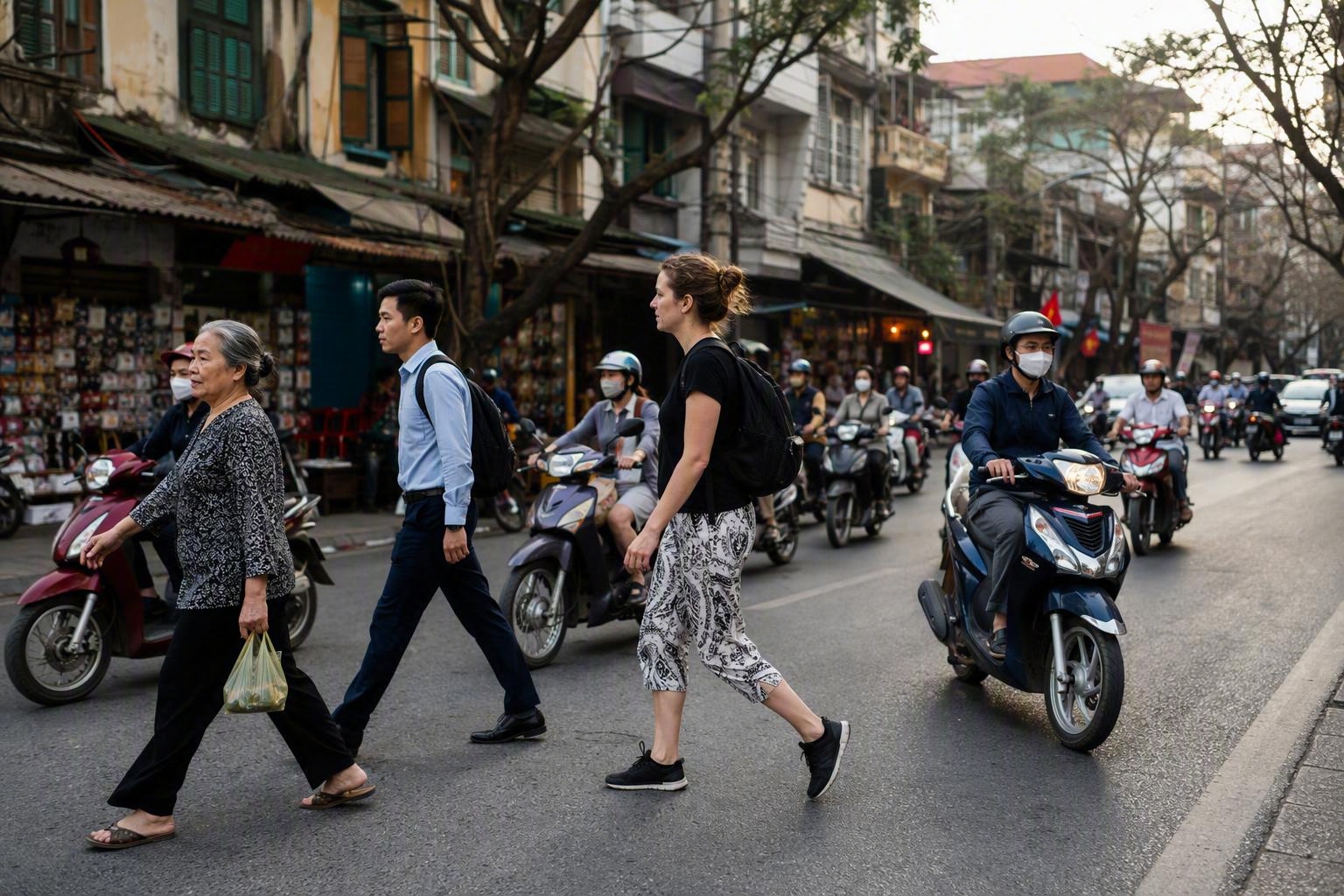
If you are unsure when to go, look for a grandparent, office worker, or student heading the same way and walk alongside them. In practice, matching a local rhythm is often the fastest way to learn how traffic moves in real time.
Give large vehicles extra space
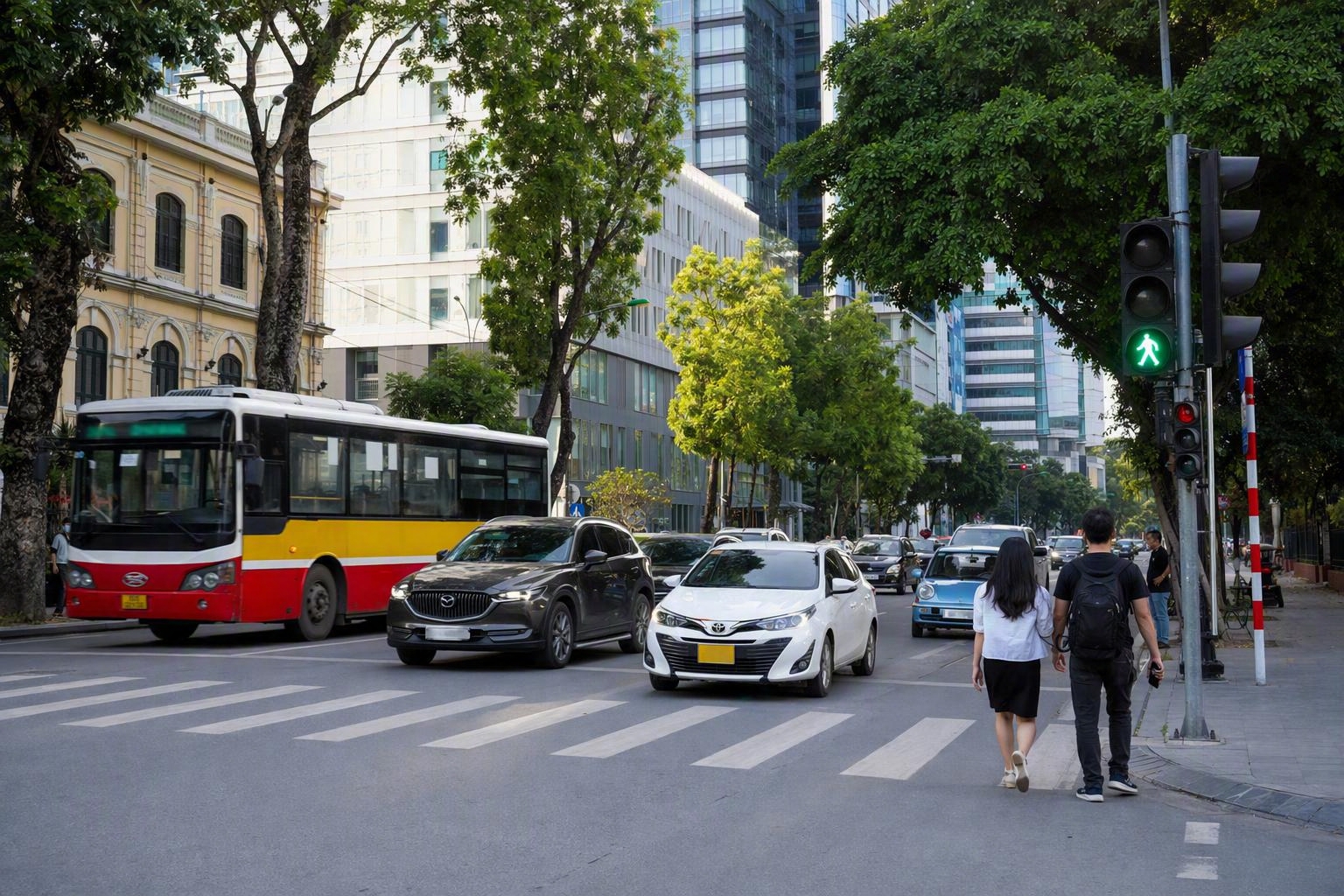
Buses, trucks, and cars cannot weave like motorbikes. Never assume they can stop or swerve easily. Stay out of their blind spots and leave room when they are turning.
Use traffic lights when they exist
Signals add an extra layer of safety on larger roads. Still stay alert: some vehicles may continue turning even when pedestrians appear to have the right of way. Lights help; they do not replace awareness.
Put your phone away
Filming or checking maps mid-crossing splits attention when you need eyes on multiple directions. Finish the photo or route check on the pavement, then walk.
The 5-second Hanoi street crossing method
When nerves spike, compress the whole process into five moves:
- Look both ways and scan turning bikes.
- Step off the curb with intent.
- Walk straight — no diagonal panic route.
- Keep the same speed the whole way.
- Arrive on the other side and reset.
Finally, remember the local secret many guides mention: visitors often panic on day one, feel nervous on day two, and by day three cross Old Quarter streets with much more ease. The street does not get quieter — you get better at reading it.
Practical notes before your first Hanoi walk
- Areas: Old Quarter streets are denser and slower to clear; wider boulevards often have lights but more cars and buses.
- Footwear: shoes you can walk in steadily beat sandals that make you rush.
- Groups: cross as a unit. Splitting the group mid-road confuses riders and you.
- Rain: ponchos and wet roads change grip and visibility. Allow more time and even more steady pace.
- Photos: capture the traffic from the sidewalk first; enjoy the crossing when you are not holding a phone.
Related reading on this site: 48 Hours in Hanoi, Hanoi Old Quarter Guide, and 16 best Pho spots in Hanoi. For more places across the country, see Vietnam destinations.
Official visitor information is available from the Vietnam National Authority of Tourism.
Planning first days in the capital around food, Old Quarter walks, or a wider Vietnam route? Browse Vietnam tours or contact V-International Tour to pace city days with the rest of your trip.