
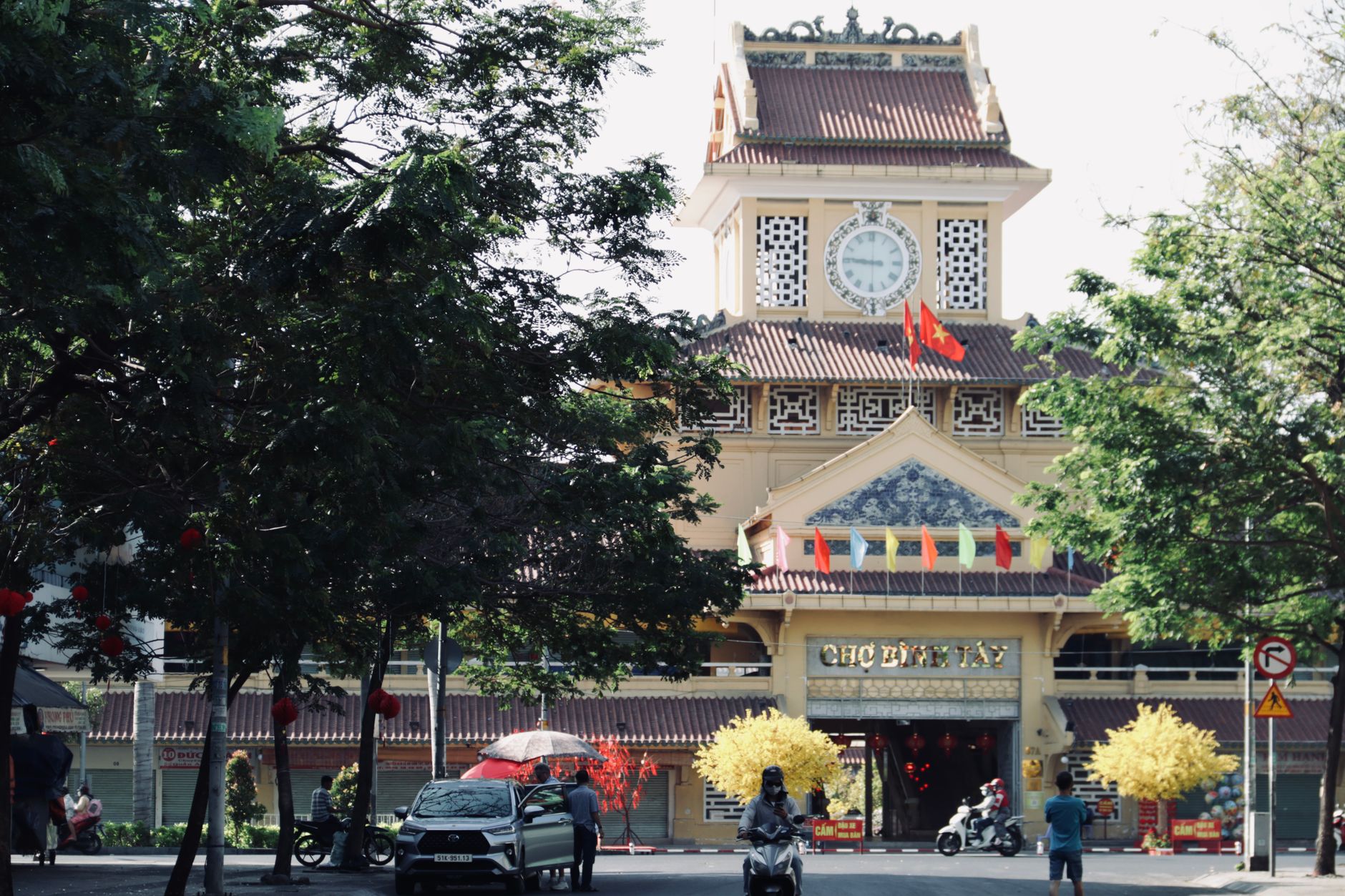
Inside Binh Tay, the 96-year-old Chinatown market in HCMC
Binh Tay Market is situated between Thap Muoi, Le Tan Ke, Phan Van Khoe. And Tran Binh streets in Binh Tay Ward, an area with a large Hoa community. People of Chinese ancestry.
Binh Tay Market is situated between Thap Muoi, Le Tan Ke, Phan Van Khoe. For travelers, the practical note is how Inside Binh Tay fits into a realistic Vietnam day.
Planning a trip around Inside Binh Tay? V-International Tour & Travel can help shape a practical Vietnam itinerary.
Inside Binh Tay in Practice
Besides serving locals, the market is a regular stop for tourists visiting HCMC. For example, according to Nguyen Thi Ngoc Chau, deputy director of the Binh Tay Ward Public Service Center. For instance, the market was built in 1930. Quach Dam, a Chinese-born merchant, funded the market’s construction.
How to Place Inside Binh Tay in Your Route
Key figures include 25,000, 17,000, 2,358. These numbers show how Inside Binh Tay is unfolding in practice.
Useful reference points: 25,000, 17,000, 2,358. Keep these in mind while you plan around inside binh.
What to Expect on the Ground
His bust stands in the atrium at the center of the market, and is also regarded as the “God of Wealth” for local traders. Every day, vendors others who make a living at the market come to burn incense. Pray for good business. Quach Dam, a Chinese-born merchant, funded the market’s construction.
For deeper insights, explore our related coverage: 3 Southeast Asian cafes make top 10 in Asia-Pacific best list and Malaysia reinstates visa requirement for Indian travelers in 2027.
Planning Notes
His bust stands in the atrium at the center of the market, and is also regarded as the “God of Wealth” for local traders. Every day, vendors others who make a living at the market come to burn incense. Pray for good business. Quach Dam, a Chinese-born merchant, funded the market’s construction.
Nearby Ideas
His bust stands in the atrium at the center of the market, and is also regarded as the “God of Wealth” for local traders. Every day, vendors others who make a living at the market come to burn incense. Pray for good business. The market, which was renovated in 2016, retains its original architecture.
For more on Vietnam travel, see also: Vietnam tours and Destinations. Official visitor information is available from the Vietnam National Authority of Tourism.
Conclusion
Inside Binh Tay is a useful stop when you want quiet roads and time to look around. Keep the day flexible, and leave space for weather and slow meals.
For more information, visit Vietnam Government Portal.
Source: https://e.vnexpress.net/photo/places/inside-binh-tay-the-96-year-old-chinatown-market-in-hcmc-5141227.html
What travellers should know
Every day, vendors and others who make a living at the market come to burn incense and pray for good business.
It has a tall tower with four clock faces. The yin-yang tiled roofs are arranged in overlapping layers and curve upward at the corners.
Practical context
In 2017, the market was recognized as a city architectural and artistic heritage site. In 2022, it was named a tourist attraction of HCMC.
According to Le Hong Minh, head of the business management team at the Binh Tay Ward Public Service Center, the market has 2,358 stalls that sell more than 30 product categories. Its main goods include spices, groceries, clothing, and confectionery.
Further reading
Every day, vendors and others who make a living at the market come to burn incense and pray for good business.
It has a tall tower with four clock faces. The yin-yang tiled roofs are arranged in overlapping layers and curve upward at the corners.
In 2017, the market was recognized as a city architectural and artistic heritage site. In 2022, it was named a tourist attraction of HCMC.
According to Le Hong Minh, head of the business management team at the Binh Tay Ward Public Service Center, the market has 2,358 stalls that sell more than 30 product categories. Its main goods include spices, groceries, clothing, and confectionery.
Additional notes
Data from 2023 to 2026 shows that 73% of visitors to the market are international. It receives 120,000 foreign visitors a year, most of them brought on guided tours.
On Sept. 8, a group of 10 Indian tourists led by Rohan and his wife spent over an hour exploring the market and buying more than a dozen handmade bags as gifts. Rohan praised its architecture and range of goods but said the products were similar to those at other markets in town.
Stalls selling dry goods and spices are located near the market’s main gate.
Minh said shopping preferences at Binh Tay vary by region. For example, european and American tourists buy handicrafts and clothing. For instance, southeast Asian visitors shop for confectionery, tea, coffee, and bamboo goods. Northeast Asian tourists prefer specialties, dried foods, and herbal medicines.
Besides shopping, the market has a food area serving dishes from all over Vietnam.
Binh Tay Market plans to combine shopping with cultural and culinary experiences by offering heritage tours, spiritual visits, performances recreating old Chinatown, craft workshops with artisans, and Chinese-Vietnamese cuisine.